
'%3e%3cpath%20d='M20.987%204.09248C21.6386%204.1889%2022.3478%204.42214%2022.7545%205.12047C23.1601%205.81707%2023.0119%206.54297%2022.7734%207.15244C22.544%207.73895%2022.1372%208.4484%2021.6633%209.27463L20.2966%2011.6585C20.0381%2012.1093%2019.8717%2012.4009%2019.7658%2012.6244C19.6862%2012.7922%2019.6715%2012.8609%2019.6692%2012.8723C19.6733%2013.009%2019.746%2013.1324%2019.8594%2013.2019C19.8717%2013.2059%2019.9388%2013.2264%2020.1189%2013.2404C20.3656%2013.2595%2020.7399%2013.2602%2021.261%2013.2602C21.8678%2013.2601%2022.3769%2013.2601%2022.774%2013.2903C23.1579%2013.3194%2023.6101%2013.3841%2023.9891%2013.6339C24.725%2014.1189%2025.1077%2014.9845%2024.9735%2015.849C24.9044%2016.2936%2024.6499%2016.6688%2024.4133%2016.9714C24.1687%2017.2843%2023.8265%2017.6595%2023.4182%2018.1072L16.4767%2025.7171C15.84%2026.4153%2015.304%2027.003%2014.8679%2027.38C14.6462%2027.5716%2014.3841%2027.7687%2014.0919%2027.8862C13.7699%2028.0158%2013.3451%2028.0708%2012.9231%2027.8529C12.5021%2027.6354%2012.3043%2027.2598%2012.2256%2026.926C12.1539%2026.622%2012.1643%2026.2964%2012.1936%2026.0056C12.2513%2025.4335%2012.4242%2024.6584%2012.6297%2023.7371L13.4965%2019.8494C13.6684%2019.0784%2013.7733%2018.5973%2013.8002%2018.2451C13.837%2017.9549%2013.5817%2017.8304%2013.4494%2017.8045C13.0999%2017.7543%2012.6072%2017.7521%2011.8141%2017.7521H11.1735C10.3134%2017.7521%209.56461%2017.7522%208.98603%2017.6668C8.37393%2017.5763%207.71865%2017.3592%207.30713%2016.7281C6.89659%2016.0986%206.96365%2015.4168%207.12868%2014.8251C7.28506%2014.2645%207.58887%2013.5832%207.93855%2012.7993L10.2354%207.64858C10.5589%206.92317%2010.8309%206.31318%2011.1083%205.83559C11.4023%205.32944%2011.742%204.89903%2012.2382%204.57761C12.7348%204.25598%2013.2684%204.12105%2013.8532%204.05871C14.4043%203.99997%2015.0747%203.99998%2015.8708%204H18.5866C19.5407%203.99994%2020.3614%203.99989%2020.987%204.09248Z'%20fill='%23282826'/%3e%3c/g%3e%3cdefs%3e%3cclipPath%20id='clip0_2524_5388'%3e%3crect%20width='32'%20height='32'%20fill='white'/%3e%3c/clipPath%3e%3c/defs%3e%3c/svg%3e)
Claude 3.5 Sonnet vs. GPT-4o: Which AI Preserves Your Visual Intent?
A side-by-side comparison of Claude 3.5 Sonnet and GPT-4o for web creators. Discover which AI model best preserves visual intent, from typography to layout, when translating designs into code.
'%3e%3cpath%20d='M119.76%2087H84V122.76L152.64%20260.04H289.92V122.76L119.76%2087ZM277.72%20247.84H164.84V134.96H277.72V247.84Z'%20fill='%23282826'/%3e%3cpath%20d='M245.17%20185.15H227.49C225.68%20185.15%20224.36%20183.44%20224.81%20181.69L230.64%20159.12C231.38%20156.26%20227.73%20154.39%20225.84%20156.65L195.28%20193.12C193.77%20194.92%20195.05%20197.67%20197.4%20197.67H215.08C216.89%20197.67%20218.21%20199.38%20217.76%20201.13L211.93%20223.7C211.19%20226.56%20214.84%20228.43%20216.73%20226.17L247.29%20189.7C248.8%20187.9%20247.52%20185.15%20245.17%20185.15Z'%20fill='%23282826'/%3e%3c/g%3e%3cdefs%3e%3cclipPath%20id='clip0_2604_131'%3e%3crect%20width='205.92'%20height='173.04'%20fill='white'%20transform='translate(84%2087)'/%3e%3c/clipPath%3e%3c/defs%3e%3c/svg%3e)
As builders who live and breathe pixels, we've moved past the initial awe of AI-generated code. The real challenge isn't just about getting functional output; it's about getting output that respects our creative intent. We pour hours into finessing a design—balancing negative space, setting a precise typographic scale, and establishing a unique brand vibe. The last thing we want is an AI partner that steamrolls those nuances, handing us a generic, soulless component. This is the new frontier for visual-first creators: finding AI that doesn't just build, but builds with taste.
The conversation around large language models has recently been dominated by the launch of Anthropic's Claude 3.5 Sonnet and OpenAI's GPT-4o. While most benchmarks fixate on logic, math, and general knowledge, builders are asking a different, more critical question: Which model truly sees my design? This isn't about which AI is "smarter" in the abstract. It's a high-fidelity comparison for those of us who translate static images into live, pixel-perfect user interfaces. According to an article on Hackernoon, the distinction matters because it’s the difference between a tool that accelerates your flow and one that forces you into a flow of endless refinement and correction.
The Modern Builder's Dilemma: Raw Power vs. Refined Intent
For creators who work at the intersection of design and development, the choice of an AI model is less about raw computational power and more about its ability to act as a faithful partner in the creative process. We aren't just looking for a code generator; we're seeking a collaborator that understands and preserves the subtleties of visual hierarchy, spatial relationships, and brand aesthetic. This is where the fundamental difference between a logic-first and a vision-first model becomes starkly apparent, which is why style-first vs logic-first workflows are a crucial consideration for anyone building with AI today.
On one hand, a model optimized for logic and speed can be incredibly effective for backend tasks, data processing, or generating boilerplate code for well-defined problems. But when that same model is asked to interpret a visual design—a PNG, a Figma screenshot, a hand-drawn wireframe—it often falls back on what it knows best: established patterns. The result is frequently a functional but uninspired UI that looks like it came from a decade-old CSS framework. It captures the "what" (a button, a card, a header) but completely misses the "how" (the specific weight, spacing, and feel). This approach can be a frustrating bottleneck, turning a promising AI tool into a source of rework. For a deeper dive into how different tools can be stacked for better results, consider exploring The Technical PM's Leverage Stack: 5 AI Tools for Building Shadow MVPs in 2026.
On the other hand, a vision-first model approaches the task from a different perspective. Its primary strength lies in interpreting visual information and understanding the intent behind the pixels. It "sees" the negative space not as an empty void but as a deliberate design element. It recognizes that a subtle difference in font weight is meant to create a specific hierarchy. This alignment with a designer's mindset is what separates a good AI partner from a merely functional one. For visual-first builders, this capability is not a luxury; it's essential for maintaining velocity without sacrificing quality. The goal is to move from a static concept to a deployed reality as seamlessly as possible, with the AI serving as an accelerator, not a filter.
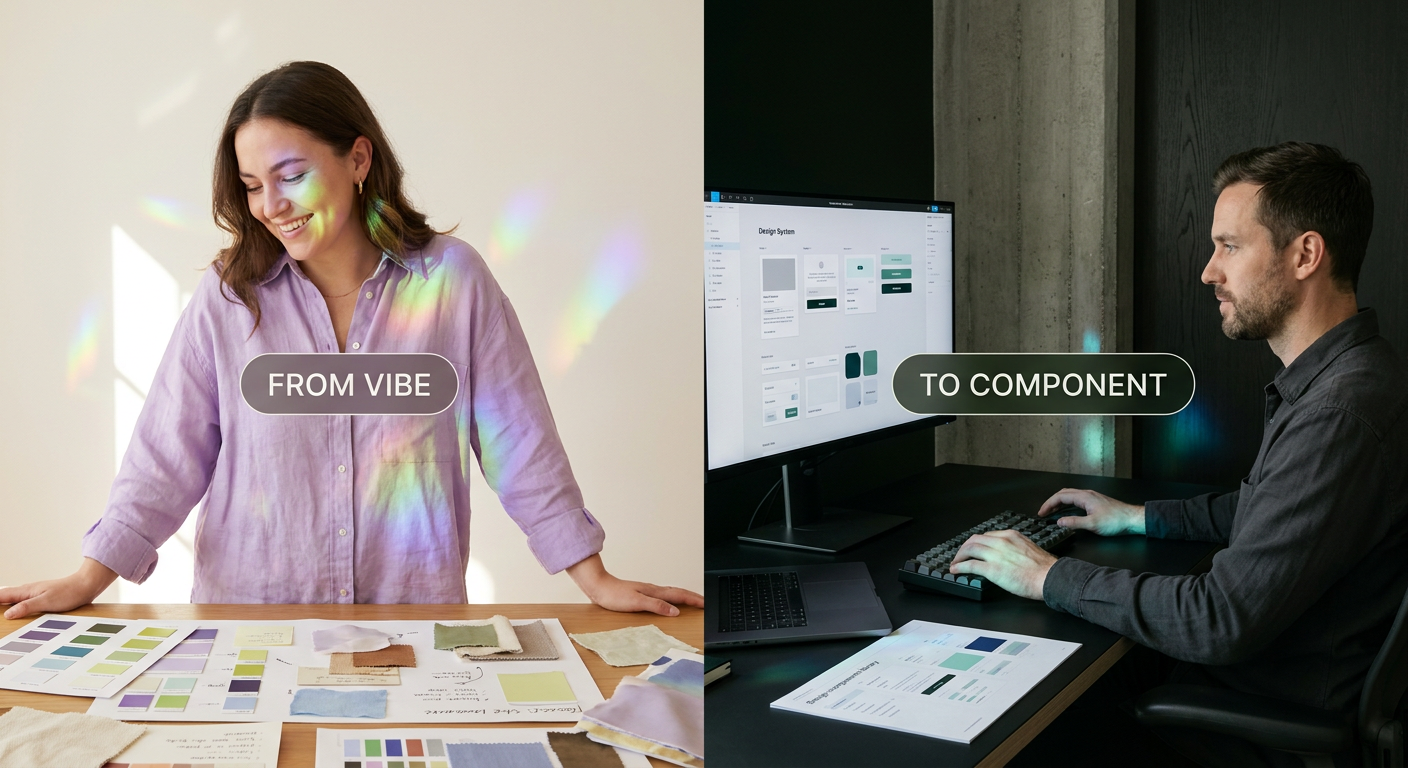
Side-by-Side: Translating a Design from Vibe to Component
Let’s ground this in a practical scenario. Imagine you have a beautifully crafted component mock-up for a client. It’s clean, modern, and uses an asymmetric layout with a specific typographic scale to guide the user’s eye. It’s not just a generic card; it’s a statement. Your goal is to turn this static image into a production-ready, responsive UI component. How do our two contenders handle the task?

GPT-4o: The Logic-First Engineer
When you present the mock-up to GPT-4o, its strengths and weaknesses become immediately clear. As a model with superior performance in real-time interactions and mixed-modality tasks, it quickly processes the image and identifies the core elements: an image, a headline, a text block, and a call-to-action button. It generates the HTML and CSS with impressive speed. The code is functional, the elements are present, and the component works.
However, the output often feels like a "flattened" interpretation of the original design. The nuanced, asymmetric layout might be replaced with a standard, centered, or grid-based structure. The carefully chosen typographic scale gives way to default tags. The negative space, so crucial to the original design's airy feel, is collapsed in favor of efficient, predictable block elements. In essence, GPT-4o often behaves like an engineer who prioritizes structure and logic over aesthetics. It builds a solid, functional component, but the unique "vibe" and visual identity of your design are lost in translation. Independent evaluations on multilingual and visual performance suggest this is a common hurdle when comparing the two models. Finding the right tools for your specific workflow is key, a concept explored further in an analysis of Generative Tools Compared: Visual Polish vs. Workflow Power.
Claude 3.5 Sonnet: The Vision-First Architect
Now, let's give the same mock-up to Claude 3.5 Sonnet. The difference is often striking. Sonnet, which demonstrates stronger performance in visual reasoning tasks, approaches the prompt with a different priority. Its vision capabilities allow it to analyze the image with a more discerning eye. It doesn’t just see "a headline"; it sees a headline with a specific font weight, color, and relationship to the elements around it. It registers the asymmetry of the layout as a key feature to be preserved, not an anomaly to be corrected.
The resulting code is more likely to reflect the original design’s spatial hierarchy. Flexbox or Grid properties are used not just to contain elements, but to re-create the intended visual tension and flow. The CSS includes the subtle details—the precise padding, the line height, the letter spacing—that made the original mock-up feel so polished. This is where Claude 3.5 Sonnet's vision capabilities shine for visual builders. It respects the "creator's touch." Furthermore, its larger context window is a significant advantage when you’re asking it to generate components that must adhere to a broader design system you’ve provided in the prompt. While no AI-generated code is perfect, Sonnet’s output provides a much stronger and more faithful starting point, significantly reducing the amount of manual refinement needed to get to a client-approved state.
Workflow Implications: When to Use Which Model
Declaring one model an outright "winner" misses the point. The sophisticated builder doesn't look for a single hammer; they cultivate a toolkit where each tool is chosen for its specific strengths. The real skill lies in understanding how to blend these powerful AI partners into a seamless workflow that accelerates projects from initial idea to deployed reality. The choice between Claude 3.5 Sonnet and GPT-4o isn’t a binary decision but a strategic one, based on the specific task at hand.
A practical, hybrid approach might look something like this. For the initial translation of a visual design mock-up into a functional component, Claude 3.5 Sonnet is proving to be the superior choice. Its strength in visual reasoning means you can provide it with a static image and expect a coded component that genuinely respects the layout, typography, and spacing. This initial step sets the stage for a more efficient build process, as you’re starting from a place of visual accuracy rather than fighting against a generic template.
Once you have this visually faithful component, you might switch to GPT-4o for a different set of tasks. Given its edge in logical reasoning and real-time interaction, GPT-4o is an excellent partner for wiring up complex front-end logic, integrating with APIs, or scripting intricate user interactions. This workflow leverages the best of both worlds: Sonnet’s design sensibility for the structure and aesthetics, and GPT-4o’s logical prowess for the interactive and dynamic elements. Platforms designed for modern builders, such as Sticklight, embrace this philosophy by providing a flexible environment where different AI models can be part of a larger, end-to-end management system, allowing creators to move fluidly from prompt to deployed software without being locked into a single ecosystem.
Conclusion: Architecting Your AI Workflow
For visual-first builders, the debate between Claude 3.5 Sonnet and GPT-4o isn't about crowning a "king." It’s about making informed, strategic decisions to build better and faster. While GPT-4o remains a formidable tool for a wide range of logical and interactive tasks, Claude 3.5 Sonnet has emerged as a powerful ally for creators who prioritize visual integrity. Its demonstrated ability to interpret and preserve design intent—from spatial relationships to typographic nuances—makes it an invaluable partner for turning static designs into production-ready code.
The most effective workflow isn't about choosing one model and discarding the other. It's about architecting a process where each AI plays to its strengths. Use Sonnet’s superior vision to get a high-fidelity first draft that honors your design. Then, lean on GPT-4o or other specialized tools to layer in complex logic and functionality. This hybrid approach allows you to maintain creative control while accelerating your development cycle, ensuring that the final product is not only functional but also pixel-perfect and true to your original vision. As builders, our role is evolving. We are no longer just creators; we are conductors, orchestrating a suite of powerful AI tools to bring our ideas to life with more precision and speed than ever before.